




What can a common person do to protect themselves from Super El Niño?
El Niño typically brings about various climatic challenges, such as extreme heat, drought, water scarcity, and occasionally, unseasonal heavy rainfall. As responsible citizens, instead of merely relying on the government or administration, we can take several small yet significant steps at our own level.
Here are some key measures you can adopt:
1. Water Conservation – The Most Crucial Step
The primary and most significant impact of El Niño manifests as water scarcity. To address this:
Prevent Water Wastage: Do not leave the tap running while brushing your teeth, washing dishes, or shaving.
Fix Leaks: Immediately repair any leaks or drips from taps, pipes, or washbasins within your home.
Water Reuse: Use the water leftover from washing vegetables or fruits to water your plants. Utilize the wastewater discharged from RO (Reverse Osmosis) filters for mopping floors or washing vehicles.
Rainwater Harvesting: If feasible, set up a system to collect rainwater at your home or within your residential society.
AI-Image
2. Protection Against Extreme Heat and Heatwaves
During El Niño, temperatures rise significantly above normal levels. To keep yourself safe:
Stay Hydrated: Regularly consume water, buttermilk, lemonade, or ORS (Oral Rehydration Solution), even if you do not feel thirsty.
Step Out at Appropriate Times: Avoid going outdoors between 12:00 PM and 3:00 PM—when the sun is at its strongest—unless absolutely necessary.
Clothing: Wear loose-fitting, light-colored, and cotton clothing. Use an umbrella, a hat or cap, and sunglasses when stepping out.
3. Energy (Electricity) Conservation
Rising temperatures lead to a massive surge in electricity demand, thereby increasing the risk of grid failures or power outages. Optimal AC Temperature: Operate your air conditioner between 24°C and 26°C. This not only conserves electricity but is also beneficial for your health.
Switch Off Unnecessary Appliances: Turn off fans, lights, and other electronic devices when no one is present in the room.
4. Proper Food Management and Health
Due to droughts or reduced crop yields, the prices of grains and vegetables may rise.
Prevent Food Wastage: Do not waste food; cook or serve yourself only as much as you actually need.
Guard Against Diseases: During an El Niño event, the risk of waterborne diseases and mosquito-borne illnesses (such as Dengue and Malaria) increases. Ensure that water does not stagnate in your surroundings, and maintain proper hygiene.
5. Responsibility Towards the Environment and Community
Promote Greenery: Plant saplings on your home’s balcony or terrace. Trees and plants help in lowering the local temperature.
Care for Animals and Birds: During this scorching heat, make it a point to place a clay pot filled with water on your terrace or balcony for voiceless animals and birds.
Spread Awareness: Encourage your family, friends, and neighbours to join you in conserving water and electricity.
A Small Suggestion:
El Niño represents a global climatic shift, but we can effectively combat its effects through our collective local and individual efforts. Even a single small step taken by you can go a long way in averting a major crisis.
Severely EL Nino Impacted Countries’
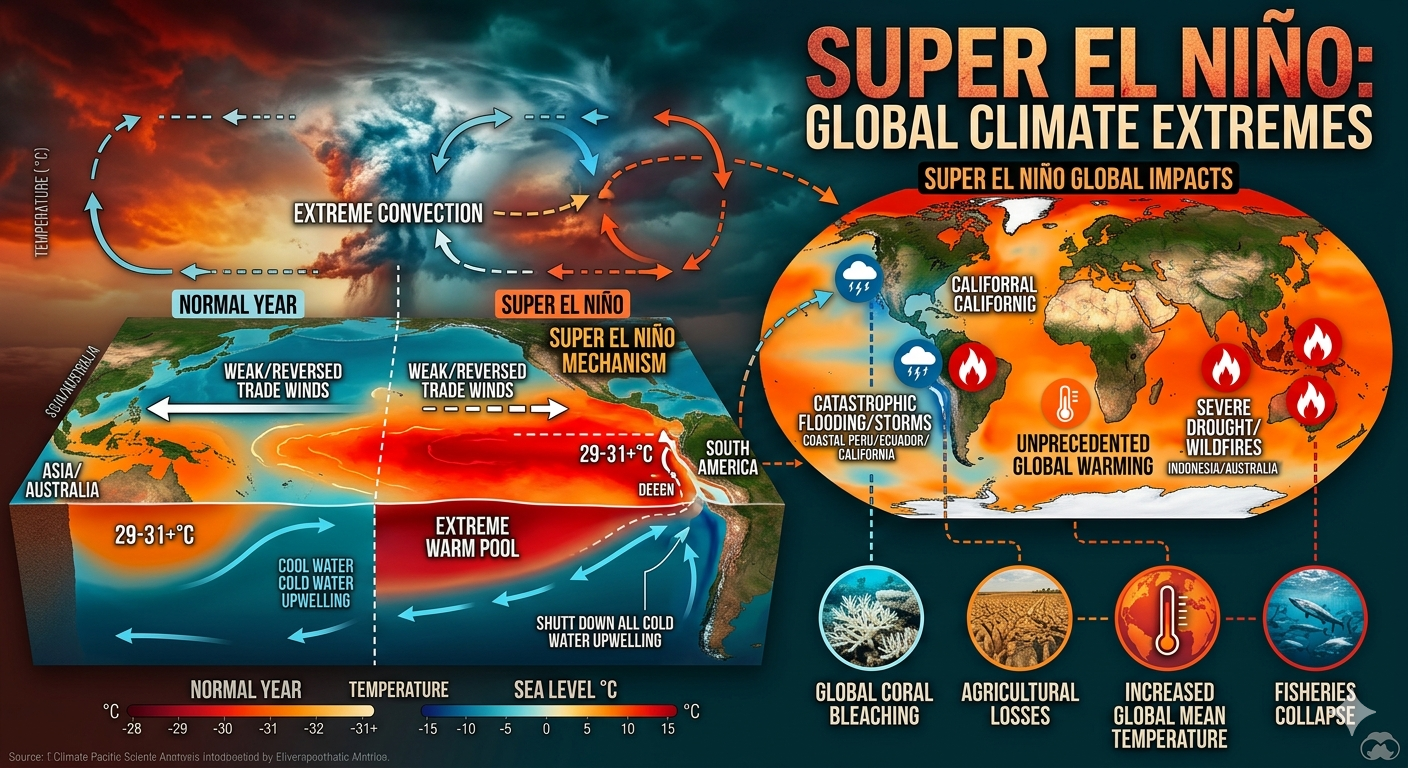
The most affected countries are usually developing tropical nations located along the Pacific and Indian Oceans, mainly because their economies rely heavily on agriculture, fisheries, and forecasted monsoon cycles.
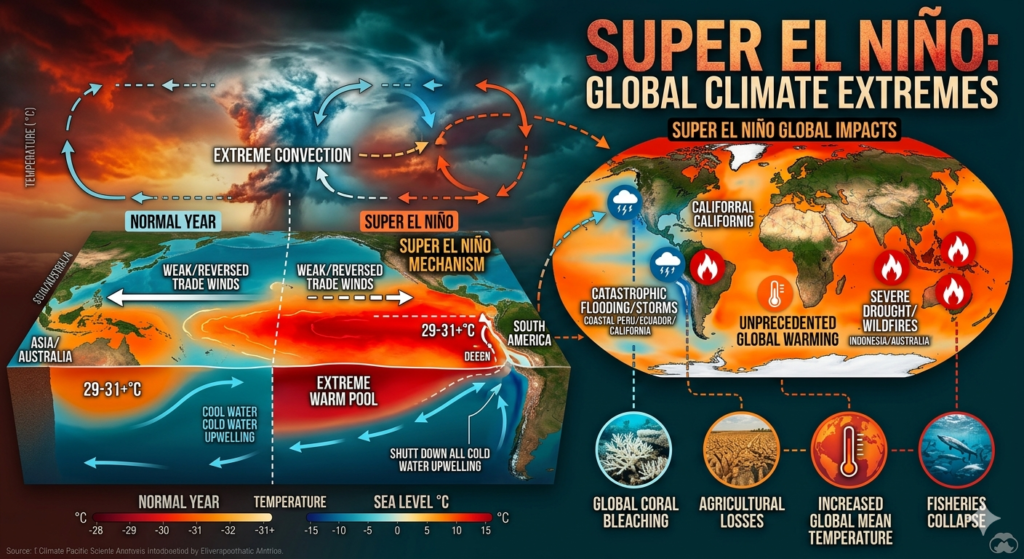
Peru and Ecuador (South America) Influence: Severe flooding and collapse of fisheries. Reason: These countries are located right next to the center of El Niño (Eastern Pacific). Generally, strong winds push warm water away from their shores, allowing cold, nutrient-rich water to come upwelling from the deep ocean, providing food for millions of fish.
• The effect of: During El Niño, these winds become weaker. Huge reserves of warm water return to the South American coast. The nutrient-rich cold water sinks deeper, causing fish populations to migrate or die, which completely devastates local fishing industries. At the same time, this intense sea heat causes torrential rains, leading to devastating landslides and floods that destroy infrastructure.
Indonesia and the Philippines (Southeast Asia) Influence: Severe drought and forest fires.
Causes: Under normal conditions, Indonesia is a “warm zone” of the sea where rain clouds naturally gather. El Niño shifts this entire rain-producing system eastward toward South America, putting Southeast Asia under high atmospheric pressure and causing negligible or no cloud cover.
• The effect of: These countries are facing a severe drought. The lack of rain causes rainforests and swamps to dry up, making them flammable. Historically, powerful El Niño events have triggered large-scale, uncontrolled wildfires in Indonesia, creating a blanket of toxic smog that worsens air quality across Southeast Asia and destroys yields of important crops such as rice and palm oil.
The Impact of Australia: heatwaves, droughts and forest fires; Reason: Like Indonesia, the northern and eastern coasts of Australia do not experience moisture-laden winds during El Niño.
• The effect of: This greatly reduces winter and spring rainfall, especially in the agricultural heartlands of the Murray-Darling basin. This leads to severe heatwaves in summer and increases the risk of devastating fires in the forest. marine ecosystems are also affected;
Warm ocean currents can lead to large-scale coral bleaching events on the Great Barrier Reef. Impact on India: Failure of monsoon and inflation of food items. Reason: El Niño disturbs the Walker Circulation (a very large ring of winds over the Pacific Ocean), directly weakening India’s southwest monsoon winds.
• The effect: Since about 60% of India’s agriculture is entirely dependent on monsoon rains, the yield of summer crops like rice, pulses and sugarcane falls drastically due to a weak monsoon. As a result, there is a huge shortage of water in the reservoirs and the price of food items increases, which has an impact on the entire economy.
Ethiopia, Somalia and Kenya (East Africa) Impact: Sudden and large changes in weather (droughts vs. severe floods) • Causes: East Africa’s climate is very complex, reacting strongly to changes in the temperature of the Indian Ocean caused by El Niño.
• The effect: The effects are often varied. Southern Africa (such as Zimbabwe and South Africa) faces severe drought and crop failure. In contrast, the Horn of Africa (Somalia, Kenya, Ethiopia) often experiences unseasonable and torrential rains during El Nino winters.
Although it’s nice to hear the rain, it often causes flash flooding that leaves millions homeless, and waterborne diseases such as cholera and Rift Valley Fever spread quickly.
The effects of climate change are multiplying: Although El Nino is a natural cycle that has been going on for centuries, these cycles have become even more “vigorous” due to the warming of the oceans around the world; As a result, droughts are now even drier, heatwaves are even hotter, and floods cause more destruction than ever before.